
Facing disability discrimination at work can be stressful, frustrating, and financially damaging. Whether you were denied reasonable accommodations, treated unfairly, harassed, or wrongfully terminated because of a disability, understanding how to build a strong case is important.
Winning a disability discrimination case often depends on evidence, documentation, timing, and legal strategy. While every situation is different, there are several important steps that can help strengthen a claim and improve the chances of a successful outcome.
Disability discrimination happens when an employer treats an employee or job applicant unfairly because of a physical or mental disability. In the United States, laws such as the Americans with Disabilities Act (ADA) protect qualified individuals from discrimination in hiring, promotions, pay, workplace accommodations, and termination.
Examples may include:
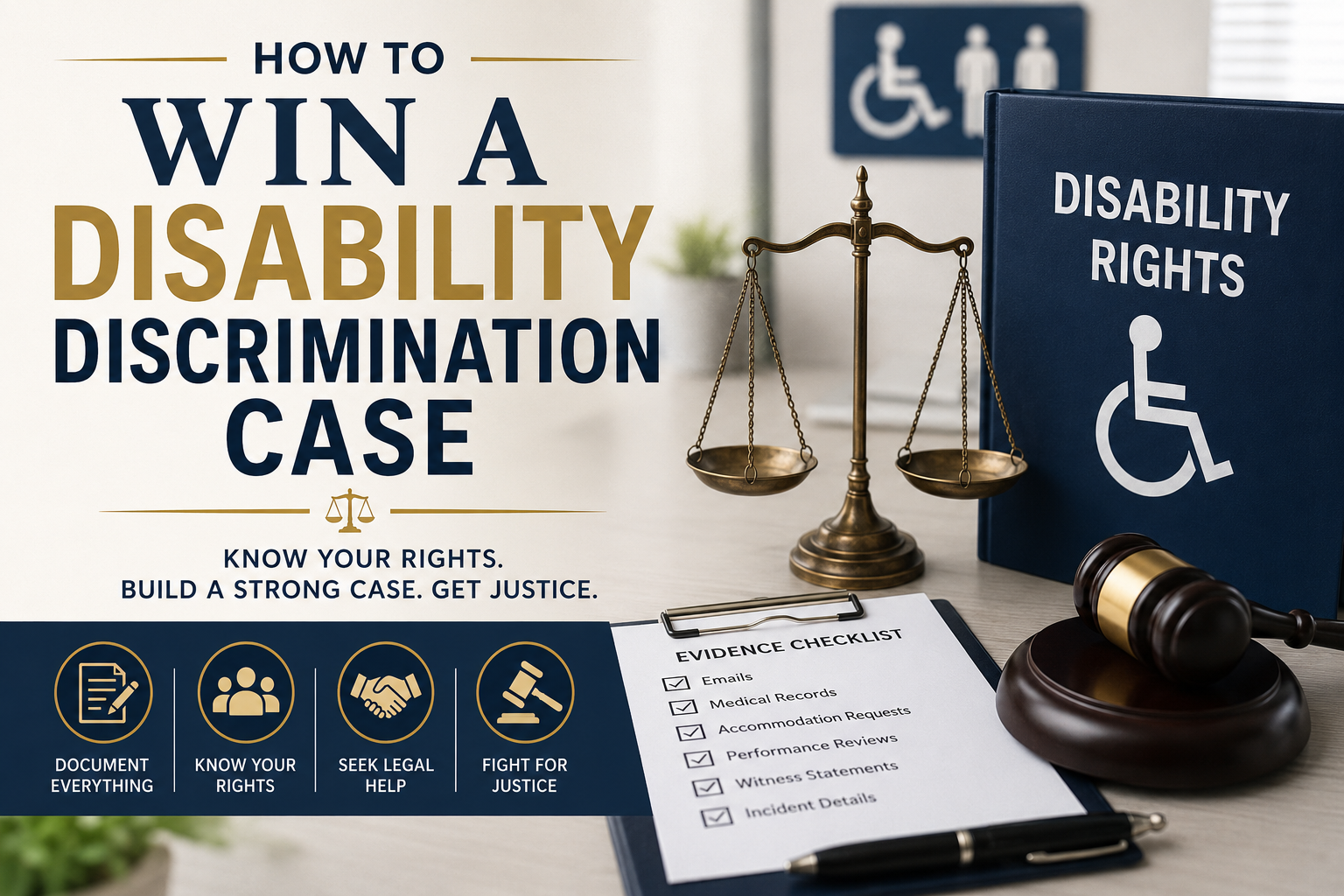
One of the most important parts of a disability discrimination case is evidence. Strong documentation can help show patterns of unfair treatment and support your version of events.
Keep records of:
Detailed records often become valuable evidence during investigations or settlement discussions.
Employers are generally required to provide reasonable accommodations if they allow an employee to perform essential job duties without causing significant hardship to the business.
Examples may include:
If accommodations were denied without proper explanation, this may strengthen a discrimination claim.
Before filing a lawsuit, many employees first report discrimination to:
Filing an internal complaint creates an official record showing that the employer was aware of the issue.
In many disability discrimination cases, employees must file a complaint with the Equal Employment Opportunity Commission (EEOC) before filing a lawsuit.
Deadlines matter. Missing filing deadlines can affect your legal rights, so acting quickly is important.
To strengthen a claim, it often helps to show:
This connection is often supported through:
Disability discrimination cases can involve employment laws, medical records, company policies, and negotiations with employers or insurance companies.
An experienced employment attorney may help:
Many people also seek legal funding options while waiting for settlements or case outcomes if financial pressure becomes difficult during litigation.
Waiting too long to report discrimination or file claims may weaken evidence and create legal deadline issues.
Social media posts can sometimes be used against claimants during legal proceedings.
Without documentation, proving discrimination becomes more difficult.
Medical records and professional recommendations may support accommodation requests and strengthen your case.
Yes. Many employment discrimination claims settle before reaching trial. Settlements may include:
However, outcomes vary depending on evidence, employer actions, and legal strategy.
Winning a disability discrimination case often requires preparation, strong evidence, proper documentation, and timely legal action. Understanding your rights and taking organized steps early can help strengthen your position.
If you believe you experienced disability discrimination, speaking with a qualified employment attorney may help you better understand your legal options and next steps.