
When you are involved in a personal injury lawsuit, waiting for a settlement can create significant financial pressure. Legal cases can take months or even years to resolve, while everyday expenses such as housing, medical bills, transportation, and household costs continue.
For qualifying plaintiffs, lawsuit funding—also called pre-settlement funding or litigation funding—may provide access to money before a legal case reaches a final settlement. Instead of waiting until the case concludes, a plaintiff may be able to receive an advance based on the potential value of their pending claim.
However, lawsuit funding is not appropriate for everyone. The agreement can involve costs and conditions that should be carefully reviewed before making a decision. Understanding both the potential benefits and the financial implications is essential.
Lawsuit funding is a financial arrangement that may allow an eligible plaintiff involved in a pending lawsuit to receive money before the case is resolved.
Unlike a traditional personal loan, lawsuit funding may be structured around the expected proceeds of a legal claim rather than the applicant’s employment income or credit history. Depending on the agreement and applicable law, repayment may be tied to the outcome of the case.
The exact structure varies between providers and jurisdictions. Applicants should carefully review the agreement and discuss it with their attorney before proceeding.
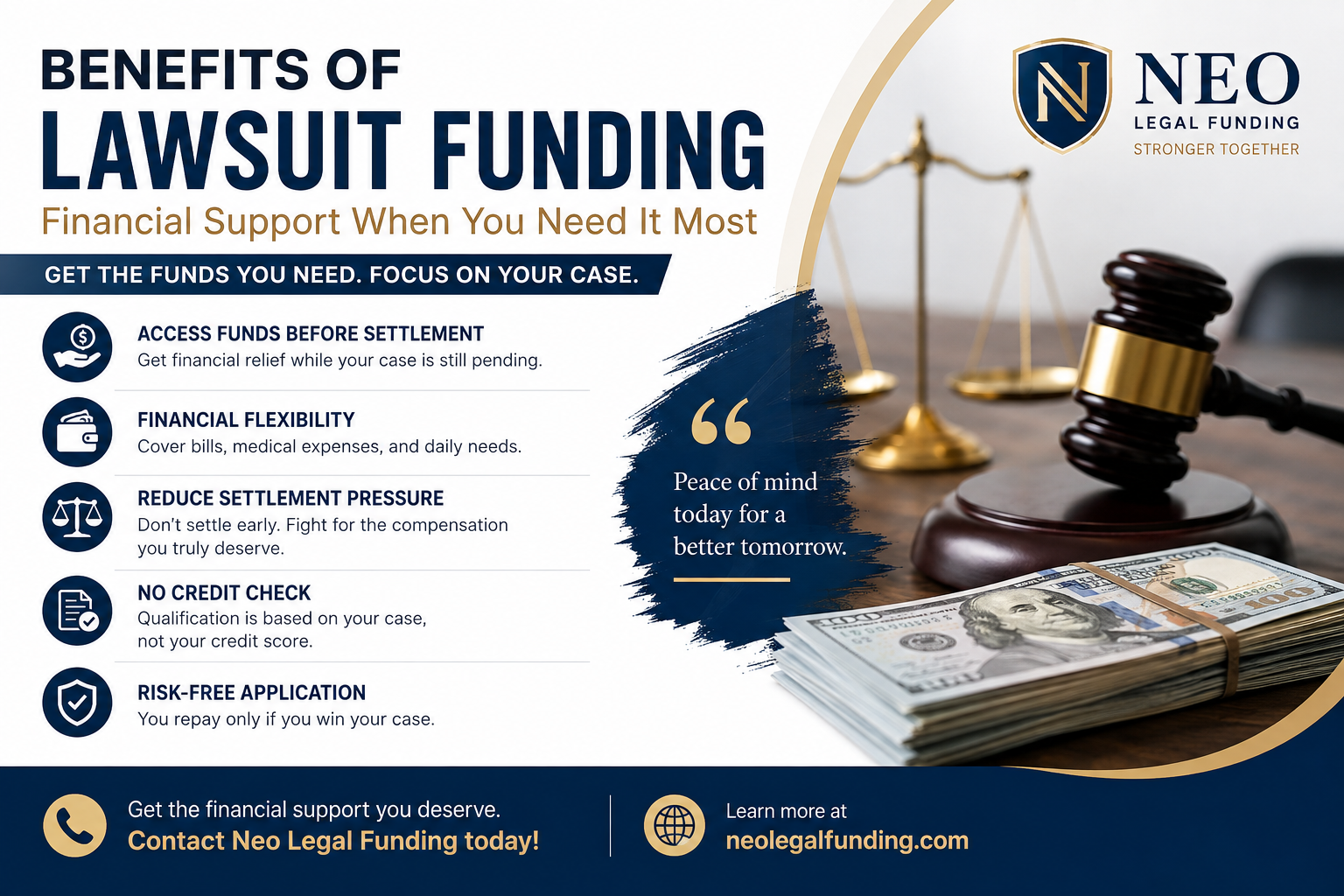
One of the primary reasons plaintiffs consider pre-settlement funding is the ability to access money while their case is still pending.
Legal cases can take considerable time to resolve. Having access to funds may help an individual manage necessary expenses during that period instead of feeling pressured to resolve the case simply because money is needed immediately.
This can be particularly important when a plaintiff is dealing with expenses related to an accident or injury.
A pending lawsuit does not stop everyday financial obligations.
Rent or mortgage payments, utilities, groceries, transportation, and other household expenses may continue while the legal process moves forward.
Depending on the amount approved, lawsuit funding may provide additional financial flexibility during this period.
The money should generally be considered carefully and used for legitimate financial needs rather than unnecessary spending.
Settlement negotiations are an important part of many lawsuits. However, financial hardship can sometimes make waiting difficult.
If a plaintiff urgently needs money, they may feel pressure to accept an offer simply because they cannot afford to continue waiting.
Access to appropriate financial resources may provide additional breathing room while settlement negotiations continue.
Importantly, lawsuit funding should not replace legal advice. Your attorney remains the appropriate person to advise you about whether a settlement offer is fair and whether accepting or rejecting it is in your legal interests.
Some lawsuit funding arrangements evaluate the underlying legal claim rather than relying solely on conventional lending factors.
This can make the application process different from applying for a traditional bank loan.
Factors considered may include the circumstances of the case, the likelihood of recovery, the expected settlement, and other information related to the litigation.
Eligibility requirements vary, so applicants should ask the funding company exactly how approval is determined.
An accident or injury can create unexpected financial challenges.
Medical-related expenses, transportation needs, household costs, and other necessary bills may become more difficult to manage while a plaintiff is unable to work or while the lawsuit remains unresolved.
For an eligible applicant, lawsuit funding may provide an additional source of money during this period.
The amount available and permitted uses can depend on the specific agreement and applicable laws.
A lawsuit requires legal strategy, negotiation, documentation, and patience.
Financial difficulties should not necessarily determine when a case is settled.
By providing potential access to funds during litigation, pre-settlement funding may allow a plaintiff to focus on their recovery and personal circumstances while their attorney continues working on the legal claim.
Again, funding does not guarantee a particular legal outcome or settlement amount.
When someone needs money unexpectedly, they may consider credit cards, personal loans, borrowing from family members, or other financial products.
Lawsuit funding is another option that some eligible plaintiffs investigate.
However, it should not automatically be considered cheaper or better than other forms of financing. The total cost, repayment terms, case outcome, and applicable state requirements should all be considered before signing an agreement.
Lawsuit funding may be considered by plaintiffs who have a pending legal claim and are experiencing financial pressure while waiting for the case to resolve.
Potential applicants may include individuals involved in cases such as:
Eligibility depends on the circumstances of the claim, the anticipated recovery, the provider’s requirements, and applicable laws.
Having a lawsuit does not automatically mean that funding will be available.
Although procedures vary, the process commonly involves several stages.
The plaintiff provides information about the pending lawsuit and their legal representation.
The funding company may review information about the claim, including the nature of the lawsuit and its potential recovery.
The plaintiff’s attorney may be contacted for case-related information and authorization, depending on the provider’s process.
If the application is approved, the provider explains the proposed funding amount and applicable terms.
This is an important step.
Before accepting any money, the plaintiff should understand the total potential repayment, fees or charges, timing, and what happens under different case outcomes.
Consumers should be especially cautious about arrangements where costs, risks, or conditions are unclear. Federal consumer-protection enforcement has previously addressed misleading or abusive practices involving advances against settlement proceeds.
If the agreement is accepted and all requirements are completed, funds may be provided according to the terms of the agreement.
The answer can depend on the specific product and how the agreement is structured.
Some legal funding arrangements are structured differently from conventional loans, while others may have characteristics that regulators or courts treat differently depending on the circumstances.
For that reason, consumers should not assume that every lawsuit funding agreement works the same way.
Read the contract carefully and ask questions about:
Although lawsuit funding can provide financial flexibility, it also comes with important considerations.
The amount you receive is not necessarily the amount that will ultimately be owed.
Ask the provider to explain the total potential repayment under different timelines and settlement outcomes.
Your attorney understands the legal claim and may be able to explain how funding could affect settlement negotiations or the proceeds of your case.
An attorney can also help you understand legal issues that may apply to your particular situation.
The longer a lawsuit takes, the more important it may be to understand how the funding arrangement works over time.
Ask whether the amount owed can increase and how the calculation changes if your case takes longer than expected.
Never rely solely on a verbal explanation.
Read the written agreement and make sure you understand the terms before signing.
If something is unclear, ask questions and consider obtaining independent legal or financial advice.
Lawsuit funding and traditional loans can work very differently.
A conventional loan may consider factors such as credit history, income, employment, debt, and ability to repay.
A lawsuit funding provider may instead focus substantially on the underlying legal claim and expected recovery.
The two options can also have different costs, repayment structures, and eligibility requirements.
Therefore, plaintiffs should compare the actual terms rather than assuming one option is automatically less expensive.
Timing varies based on the provider, the complexity of the case, documentation, attorney cooperation, and other requirements. Ask the provider for an estimated timeline before applying.
Some lawsuit funding arrangements may place more emphasis on the underlying legal claim than traditional lending criteria. However, eligibility requirements vary between providers.
Depending on the agreement and applicable requirements, funds may be used for personal financial needs. Always review the terms of your specific agreement.
Funding does not determine whether you win or lose a lawsuit. However, because the agreement may affect the amount ultimately available from settlement proceeds, discuss the arrangement with your attorney before accepting it.
This depends on the specific agreement and applicable law. Do not assume that every lawsuit funding arrangement has the same outcome if a case is unsuccessful. Ask this question before signing any contract.
Rules governing litigation funding can vary by state and by the type of transaction. Availability and terms may therefore differ depending on where your case is being handled.
The biggest potential benefit of lawsuit funding is straightforward: it may provide eligible plaintiffs with access to money while they wait for their legal case to resolve.
That financial flexibility can be valuable when a plaintiff is dealing with everyday expenses, unexpected costs, or financial pressure during a lengthy legal process.
At the same time, lawsuit funding is a financial decision that should not be taken lightly. Costs, repayment terms, case outcomes, and applicable laws can all affect whether it makes sense for an individual situation.
If you are considering pre-settlement funding, review the agreement carefully, understand the total potential cost, and speak with your attorney before making a decision.
If you have a pending lawsuit and are considering your financial options while waiting for a settlement, Neo Legal Funding can help you understand whether you may qualify for lawsuit funding.
Contact Neo Legal Funding to learn more about the application process and available options for qualifying plaintiffs.
Important: This article is for general educational purposes and is not legal, financial, or tax advice. Laws and funding arrangements vary by jurisdiction and individual circumstances. Speak with a qualified attorney and review the specific terms of any funding agreement before making a decision.