
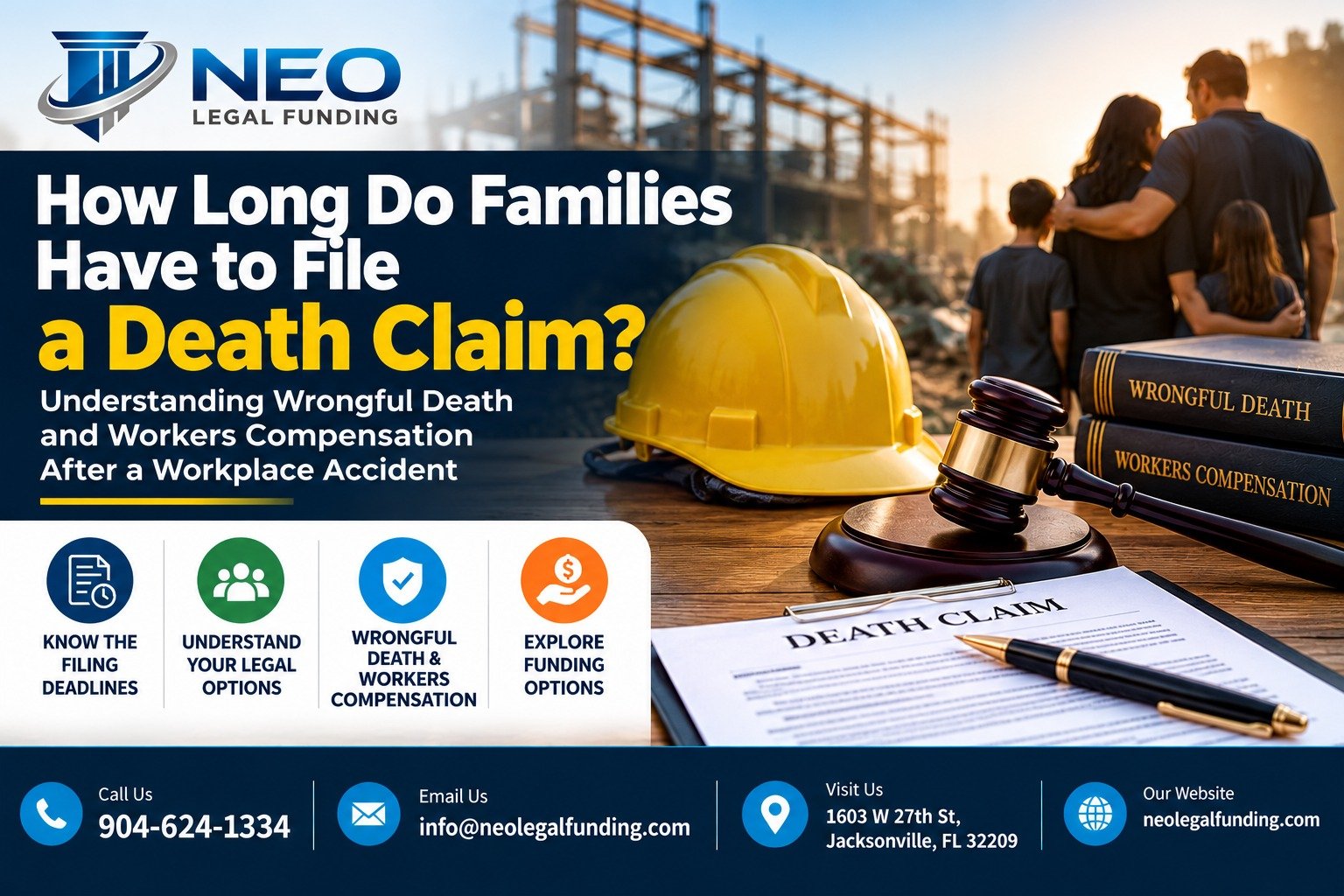
Losing a loved one in a workplace accident is devastating. Alongside grief and emotional stress, families may face funeral expenses, lost household income, medical bills, and uncertainty about their financial future. Understanding the time limits for filing a claim can help surviving family members protect their rights and explore the compensation that may be available.
Two important legal options may arise after a fatal workplace accident: a Wrongful Death lawsuit and Workers Compensation death benefits. These are different types of claims, and each follows its own rules, eligibility requirements, and filing deadlines.
For families in Florida, understanding these distinctions is especially important. Although certain claims may generally have a two-year filing period, the deadline depends on the type of claim and the circumstances of the death. NEO Legal Funding encourages families to consult a qualified attorney promptly to understand their options.
A Wrongful Death claim may arise when a person’s death is allegedly caused by another party’s negligence, wrongful act, or other legally actionable conduct. In a workplace setting, the circumstances might involve unsafe premises, defective equipment, or the actions of a third party.
However, workers’ compensation laws can limit lawsuits against employers in many situations. Whether a separate Wrongful Death lawsuit is available depends on the facts, applicable law, and any relevant exceptions.
In Florida, a Wrongful Death lawsuit generally must be filed within two years of the date of death. Florida law establishes this limitation period, although certain exceptions may apply depending on the circumstances.
Under Florida Statutes Section 768.20, the wrongful death action must generally be brought by the deceased person’s personal representative for the benefit of eligible survivors and the estate.
Families should not assume that negotiations with an insurer, an ongoing investigation, or a workers’ compensation claim automatically extends the deadline for a separate Wrongful Death lawsuit.
Eligibility depends on the legal circumstances and the relationship between the deceased person and the surviving family members.
Potentially eligible survivors may include:
An attorney can explain which family members may be entitled to damages and who has legal authority to bring the action.
Workers Compensation is a separate system designed to provide specified benefits when an employee suffers a qualifying work-related injury or death. Depending on the circumstances, eligible dependents may receive benefits without having to prove employer negligence.
Florida’s workers’ compensation laws provide for certain death benefits, including qualifying funeral expenses and compensation for eligible dependents. The availability and amount of benefits depend on statutory requirements.
Under Florida Statutes Section 440.19, petitions for workers’ compensation benefits are generally subject to a two-year time limit measured from when the employee or estate knew or should have known that the injury or death arose out of work performed in the course and scope of employment. Notice requirements and other statutory provisions also apply.
The rules are technical, so families should report the death promptly and seek advice about the correct filing procedure rather than relying on the general deadline alone.
Depending on eligibility and the circumstances of the workplace death, Workers Compensation benefits may include:
Florida law provides for funeral expenses up to $7,500 in qualifying cases, while other death benefits are subject to statutory conditions and limits.
When exploring a Wrongful Death claim or Workers Compensation benefits, organizing documents can help the attorney and claims administrator review the circumstances.
Consider gathering:
Not every document will be required in every case, but keeping relevant records organized can help prevent avoidable delays.
Taking practical steps early can help families understand their legal and financial options without making rushed decisions.
First, report the death and preserve relevant evidence. Keep copies of workplace reports, communications, and available records concerning the incident.
Second, consult an attorney experienced in workplace fatalities. Ask about the applicable deadlines, whether a separate Wrongful Death action may be possible, and which Workers Compensation benefits may be available.
Third, keep track of financial obligations. Funeral costs, household expenses, and lost income can create immediate pressure. A clear list of expenses can help the family understand its short-term financial needs.
Finally, review financial options carefully. If the family is considering legal funding connected to a qualifying pending lawsuit, it should understand the costs, repayment provisions, and eligibility requirements before signing an agreement. Funding is not guaranteed and should not be treated as a substitute for legal advice.
NEO Legal Funding provides legal funding options for eligible plaintiffs with qualifying pending legal claims. Depending on the circumstances, legal funding may be worth discussing when an eligible claimant faces financial pressure while a case is unresolved.
However, funding eligibility depends on the provider’s review and applicable agreement. A Wrongful Death claim does not automatically qualify for funding, and the availability of funding should never be interpreted as a prediction of a legal outcome.
Families should speak with their attorney before entering into a funding arrangement and carefully consider the total cost and repayment terms.
Understanding the deadlines for a Wrongful Death lawsuit and Workers Compensation death benefits is an important step after a fatal workplace accident. In Florida, both types of claims may involve a general two-year time limit, but the applicable rules, starting dates, eligibility criteria, and exceptions differ.
Families should seek legal guidance as soon as possible to identify the correct deadlines and protect any available rights. NEO Legal Funding can discuss potential funding options with eligible plaintiffs, while case-specific legal questions should be addressed by a qualified attorney.
Disclaimer: This article provides general information and is not legal or financial advice. Laws and deadlines vary by jurisdiction and circumstances. Consult a qualified attorney regarding your specific situation.
Frequently Asked Questions
Q1. How long do families have to file a Wrongful Death claim in Florida?
A Florida Wrongful Death lawsuit generally must be filed within two years of the date of death. Exceptions may apply, so families should consult an attorney promptly.
Q2. Is the Workers Compensation deadline the same as the Wrongful Death deadline?
Not necessarily. Florida workers’ compensation benefits have separate statutory requirements and time limits. A lawyer can explain which deadlines apply to the family’s circumstances.
Q3. Can a family pursue Workers Compensation and a Wrongful Death lawsuit?
Potentially, depending on the circumstances. Workers’ compensation may be the exclusive remedy against an employer in many cases, while certain third-party claims may remain available. An attorney can assess the applicable rules.
Q4. Can NEO Legal Funding help with expenses while a case is pending?
NEO Legal Funding can discuss potential legal funding options with eligible plaintiffs. Availability depends on the case review and funding agreement. Families should consult their attorney and carefully review all terms before proceeding.