
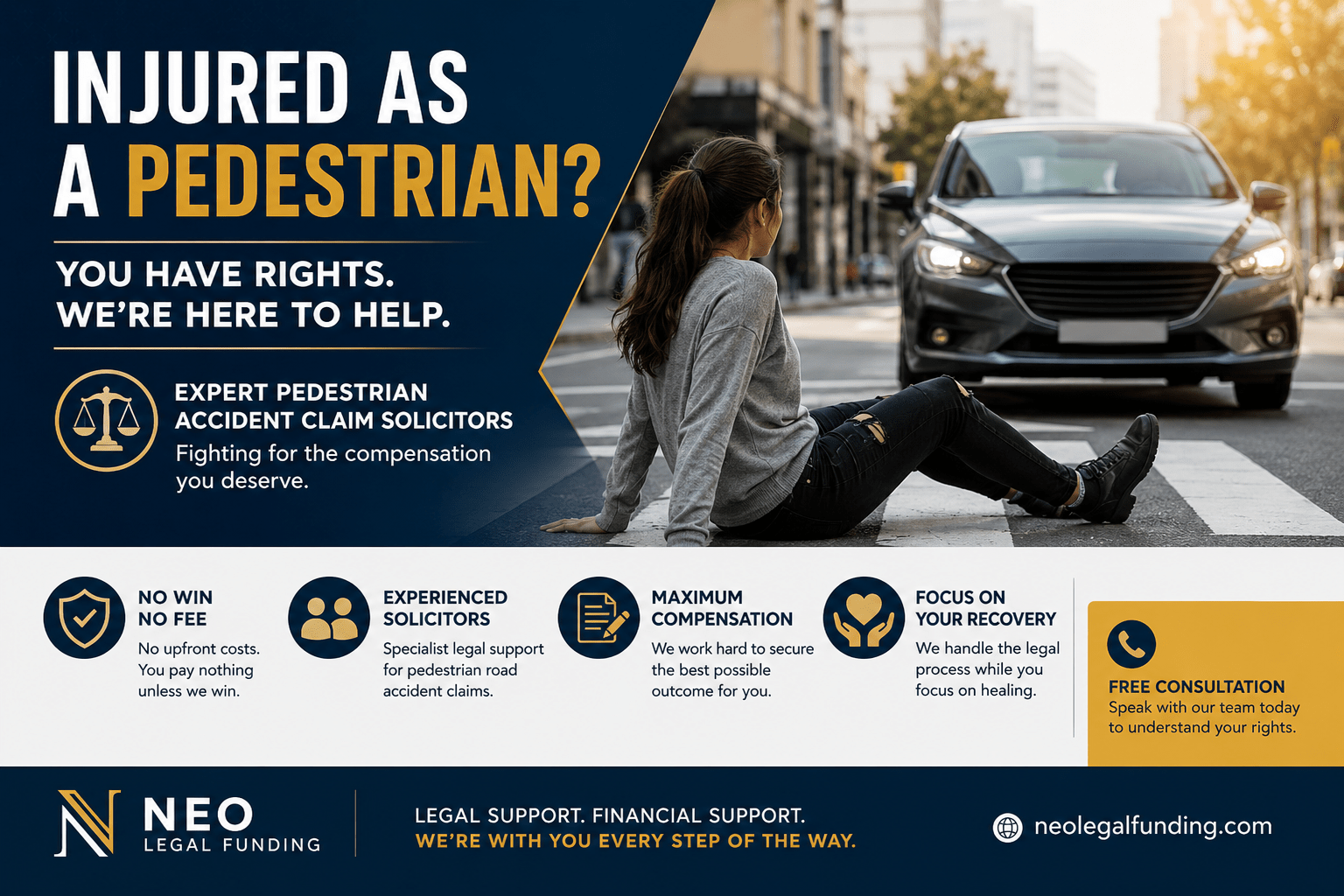
Pedestrians are among the most vulnerable road users. Unlike drivers and passengers who benefit from vehicle protection systems, pedestrians have little defense against the impact of a collision. Even low-speed accidents can result in serious injuries, extensive medical treatment, lost income, and long-term emotional trauma.
If you have been injured while walking due to another party’s negligence, you may be entitled to pursue a pedestrian accident claim. Understanding your rights and the claims process can help you seek the compensation needed to support your recovery. Pedestrian accident claims generally arise when a driver, cyclist, motorcyclist, local authority, or another party fails to exercise reasonable care, resulting in injury to a pedestrian.
A pedestrian accident claim is a legal action brought by an injured pedestrian seeking compensation for injuries and financial losses caused by another party’s negligence. These claims commonly involve:
To successfully pursue a claim, it must generally be demonstrated that another party owed a duty of care, breached that duty, and caused the injuries suffered by the pedestrian.
Pedestrian accidents occur for many reasons, but negligence is often a key factor. Common causes include:
Drivers using mobile phones, navigation systems, or engaging in other distractions may fail to notice pedestrians crossing roads or walking near traffic.
Excessive speed reduces reaction times and increases the severity of injuries sustained in a collision.
Many accidents occur when drivers fail to stop at crosswalks, intersections, or pedestrian crossings.
Alcohol or drug impairment can significantly affect judgment, reaction time, and vehicle control.
Uneven pavements, inadequate signage, poor lighting, and defective road surfaces can contribute to pedestrian accidents.
Aggressive maneuvers, running red lights, and ignoring traffic laws place pedestrians at serious risk.
Because pedestrians have little physical protection, injuries are often severe. Common injuries include:
Pedestrian accidents frequently result in long-term rehabilitation, ongoing medical care, and significant lifestyle changes. Even seemingly minor injuries can have lasting consequences.
Determining liability is one of the most important aspects of any pedestrian accident claim.
Potentially responsible parties may include:
Drivers who fail to obey traffic laws or operate their vehicles safely.
Cyclists and motorcyclists who ignore pedestrian right-of-way rules.
Government agencies responsible for maintaining roads, pavements, crossings, and public infrastructure.
Companies may be liable when employees cause accidents while performing work-related duties.
Property owners may be responsible if hazardous conditions contribute to a pedestrian injury.
In some cases, multiple parties may share responsibility for the accident. Even if a pedestrian is found partially at fault, compensation may still be available depending on the circumstances.
Pedestrian accident compensation typically falls into two categories.
These compensate for:
These cover financial losses such as:
The value of a claim depends on the severity of injuries, financial losses, and long-term impact on the victim’s life.
Strong evidence often plays a critical role in achieving a successful outcome.
Useful evidence may include:
The sooner evidence is gathered, the stronger the claim may be. Solicitors often work quickly to preserve critical information before it becomes unavailable.
Taking the right steps immediately after an accident can help protect both your health and legal rights.
Even if injuries seem minor, obtain a professional medical evaluation.
Contact law enforcement and ensure an official report is created.
Take photographs, collect witness details, and preserve any available evidence.
Maintain records of medical treatment, expenses, and lost income.
Early legal advice can help you understand your options and avoid mistakes that could affect your claim.
Yes. Many pedestrian accident cases involve shared responsibility.
For example, a pedestrian may have crossed outside a designated crossing while a driver was speeding or distracted. In such situations, compensation may still be available, although the final award could be adjusted based on each party’s level of responsibility. Courts and insurers often assess the specific facts of the accident before determining fault allocation.
Hit-and-run accidents can be particularly stressful and frustrating. However, injured pedestrians may still have legal options even when the driver cannot immediately be identified.
Compensation may be available through alternative legal mechanisms, insurance provisions, or compensation programs depending on the jurisdiction and circumstances of the accident. Experienced solicitors can help identify the most appropriate route for pursuing recovery.
Pedestrian accident cases often involve complex liability disputes, insurance negotiations, and medical evidence.
Experienced solicitors can help by:
Having professional legal support can significantly reduce stress and improve the likelihood of obtaining fair compensation.
While legal representation focuses on securing compensation, many injured pedestrians face immediate financial pressure from medical bills, household expenses, and lost income.
At Neo Legal Funding, we understand the challenges accident victims face during lengthy legal proceedings. Our funding solutions may help qualified claimants access financial support while their cases are pending, allowing them to focus on recovery rather than financial uncertainty.
A pedestrian accident can change your life in an instant. Serious injuries, mounting expenses, and emotional distress can create significant challenges for victims and their families. Fortunately, the law provides pathways to seek compensation when another party’s negligence causes harm.
If you or a loved one has been injured in a pedestrian road accident, understanding your legal rights is the first step toward recovery. Consulting experienced pedestrian accident claim solicitors can help you evaluate your case, protect your interests, and pursue the compensation you deserve.