Personal injury loan companies commonly provide what is known as pre-settlement funding. This type of arrangement is associated with a pending legal claim and may provide an eligible claimant with money before receiving a settlement or court award.
Despite the word “loan,” some legal funding arrangements are structured as non-recourse advances. Under these agreements, repayment generally depends on whether the claimant receives a recovery and on the specific contract terms. The structure and legal treatment of funding can vary by provider and jurisdiction.
The process typically starts when an injured person contacts a funding company and provides basic information about their pending claim. The provider may communicate with the applicant’s attorney to review the case before determining whether to make an offer.
A typical application process may include:
Not all personal injury loan companies follow the same process. Application requirements, review periods, and funding decisions depend on the individual provider and case.
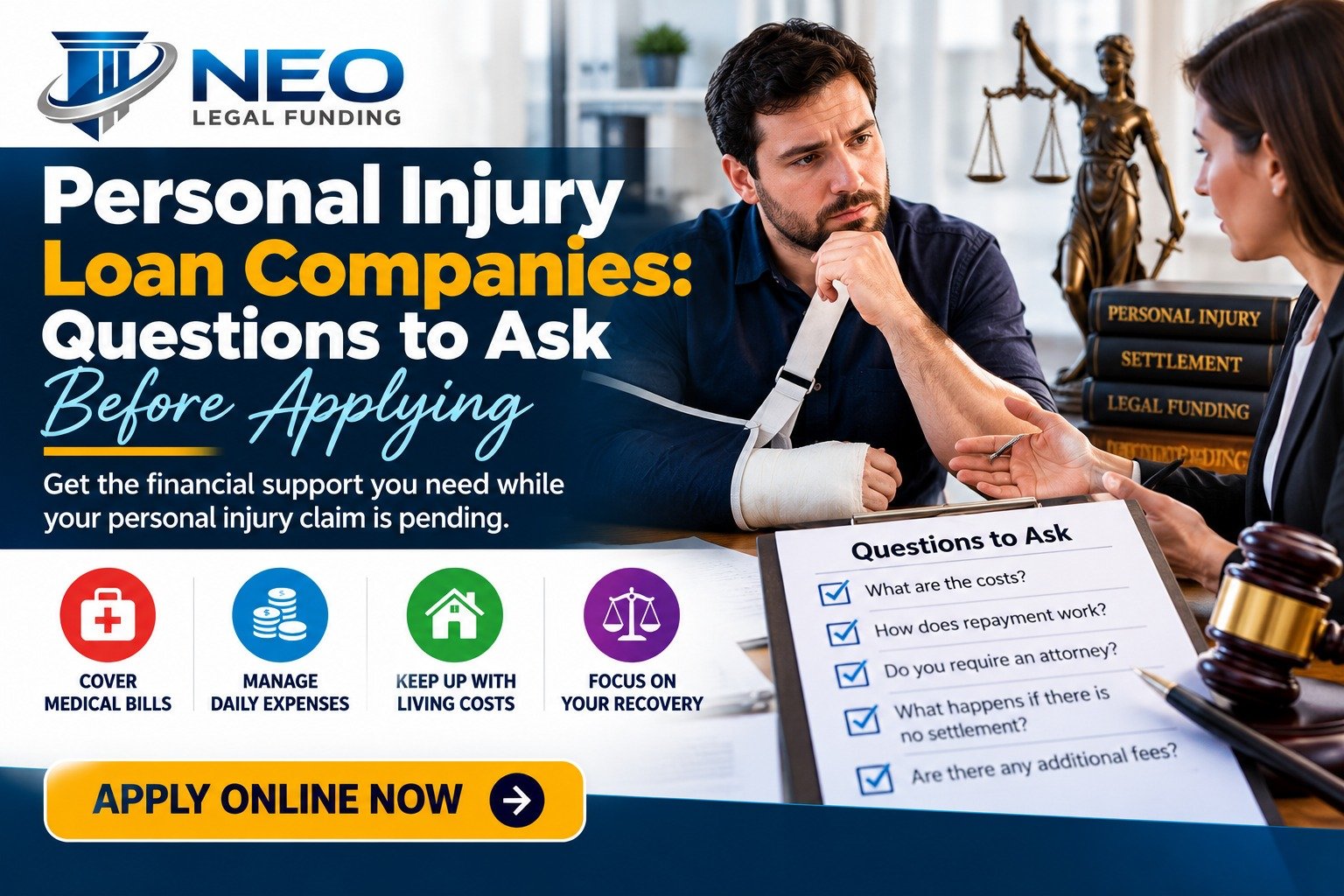
Before accepting a personal injury loan, take time to understand how the agreement works. A provider’s advertised funding amount is only one consideration; the total amount that may be owed later is equally important.
Here are some questions worth asking:
Request clear answers in writing whenever possible. Comparing personal injury loan companies based on their full terms, rather than the initial amount offered, can help you make a more informed decision.
Some funding agreements calculate charges over time. Depending on the contract, a longer case may result in a larger repayment obligation, which could reduce the amount you ultimately receive from your settlement.
Before signing, ask the provider to show examples of the potential repayment amount after different periods, such as six, twelve, and eighteen months. This can help you understand how the arrangement may affect your finances if the claim takes longer to resolve.
If the agreement is described as non-recourse, ask exactly what that means under its terms and what happens if there is no recovery.
Eligibility varies among personal injury loan companies. Many providers consider the underlying legal claim rather than relying exclusively on traditional credit-based lending criteria.
Factors that may be relevant include:
Having an injury or filing a lawsuit does not automatically guarantee approval. Each funding company applies its own review process, and the amount offered may differ from one applicant to another.
When comparing personal injury loan companies, look beyond advertising claims and evaluate the overall agreement. A careful comparison can help you understand your options and decide whether funding is appropriate for your circumstances.
A reliable provider should explain its application requirements, funding structure, costs, and repayment conditions clearly. You should have an opportunity to review the written agreement and ask questions before making a commitment.
Consider comparing providers on these points:
Do not rely solely on statements about fast approvals or easy applications. Funding availability and timing depend on the provider’s review and the information required to evaluate your claim.
A personal injury loan is not necessarily the best choice for everyone. Before proceeding, consider whether other resources may help you manage immediate expenses.
Potential alternatives include:
If you decide to pursue funding, consider requesting only enough to address your essential needs. A larger advance may create a greater repayment obligation and reduce the funds available from a future recovery.
NEO Legal Funding provides legal funding services for eligible plaintiffs who are exploring financial options while their personal injury claims remain pending.
If you are comparing personal injury loan companies, you can visit the NEO Legal Funding personal injury page to learn more about its services and application process.
Before accepting an offer, discuss the agreement with your attorney. Your attorney can help explain how funding may interact with settlement proceeds, legal fees, medical liens, and other obligations associated with your claim.
The goal is to understand the complete financial arrangement before making a decision, rather than focusing only on how much money may be available upfront.
Facing financial pressure after an injury? Explore pre-settlement funding options for eligible plaintiffs with pending personal injury claims. Understand the eligibility criteria, fees, and repayment terms before applying.
Choosing among personal injury loan companies requires careful consideration of the agreement, repayment terms, eligibility requirements, and available alternatives. Understanding these factors can help you decide whether pre-settlement funding fits your current financial needs.
Before accepting a personal injury loan, request a clear explanation of all costs, review the contract carefully, and consult your attorney about your specific circumstances. NEO Legal Funding can provide information about its process and funding options for eligible plaintiffs, but approval, funding amounts, and timelines are not guaranteed.
Frequently Asked Questions
Q1. What are personal injury loan companies?
Personal injury loan companies offer financial advances connected to eligible pending personal injury claims. Some arrangements are structured as non-recourse funding, meaning repayment depends on a recovery under the agreement’s terms. Applicants should review the complete contract before accepting an offer.
Q2. Do I need an attorney to obtain a personal injury loan?
Many providers require attorney involvement because they need information about the pending legal claim. Requirements vary, so confirm the application process with the funding company before applying.
Q3. How much can I receive from a personal injury loan?
The amount depends on factors such as the circumstances of the claim, available evidence, potential recovery, existing obligations, and the provider’s criteria. No particular amount or approval outcome is guaranteed.
Q4. What should I compare when choosing personal injury loan companies?
Compare the total potential repayment amount, fees, how charges accumulate, unsuccessful-case provisions, application requirements, and communication practices. Ask for written terms and discuss the agreement with your attorney.