Losing a loved one because of another person’s negligence can bring emotional hardship and unexpected financial responsibilities. Families may face funeral expenses, outstanding medical bills, mortgage payments, household costs, and the loss of income that once supported their daily needs. When a wrongful death lawsuit is pending, these financial pressures can become even more difficult to manage.
Wrongful Death claims can take time to resolve, and families may need financial assistance before receiving compensation. This is where lawsuit funding for wrongful death case claims may become an option worth exploring.
NEO Legal Funding offers wrongful death pre-settlement funding for eligible plaintiffs with pending legal claims. This type of financial arrangement may help qualifying individuals manage essential expenses while their attorney works on the case.
Understanding how wrongful death funding works, who may qualify, and what repayment terms apply can help families make informed decisions during a challenging period.
A wrongful death claim is a civil legal action brought when someone dies because of another party’s alleged negligence, misconduct, or wrongful act. Depending on the circumstances and applicable state law, a claim may involve a fatal vehicle accident, medical malpractice, workplace incident, defective product, or unsafe property condition.
The purpose of a wrongful death lawsuit is generally to seek compensation for legally recognized losses suffered by eligible surviving family members or the estate.
Wrongful death lawsuit funding is a form of pre-settlement financial assistance connected to a pending wrongful death claim. It may allow an eligible claimant or legally authorized representative to access an advance before the lawsuit reaches a settlement or verdict.
Unlike a traditional personal loan, many legal funding arrangements are structured as non-recourse agreements. This generally means repayment is limited to the financial recovery from the case, subject to the specific agreement.
Lawsuit funding for wrongful death case claims may help eligible applicants manage immediate financial responsibilities without waiting for the entire legal process to conclude.
A wrongful death can affect nearly every aspect of a family’s financial situation. When a loved one was a primary income earner or provided essential household support, surviving family members may need time to adjust financially.
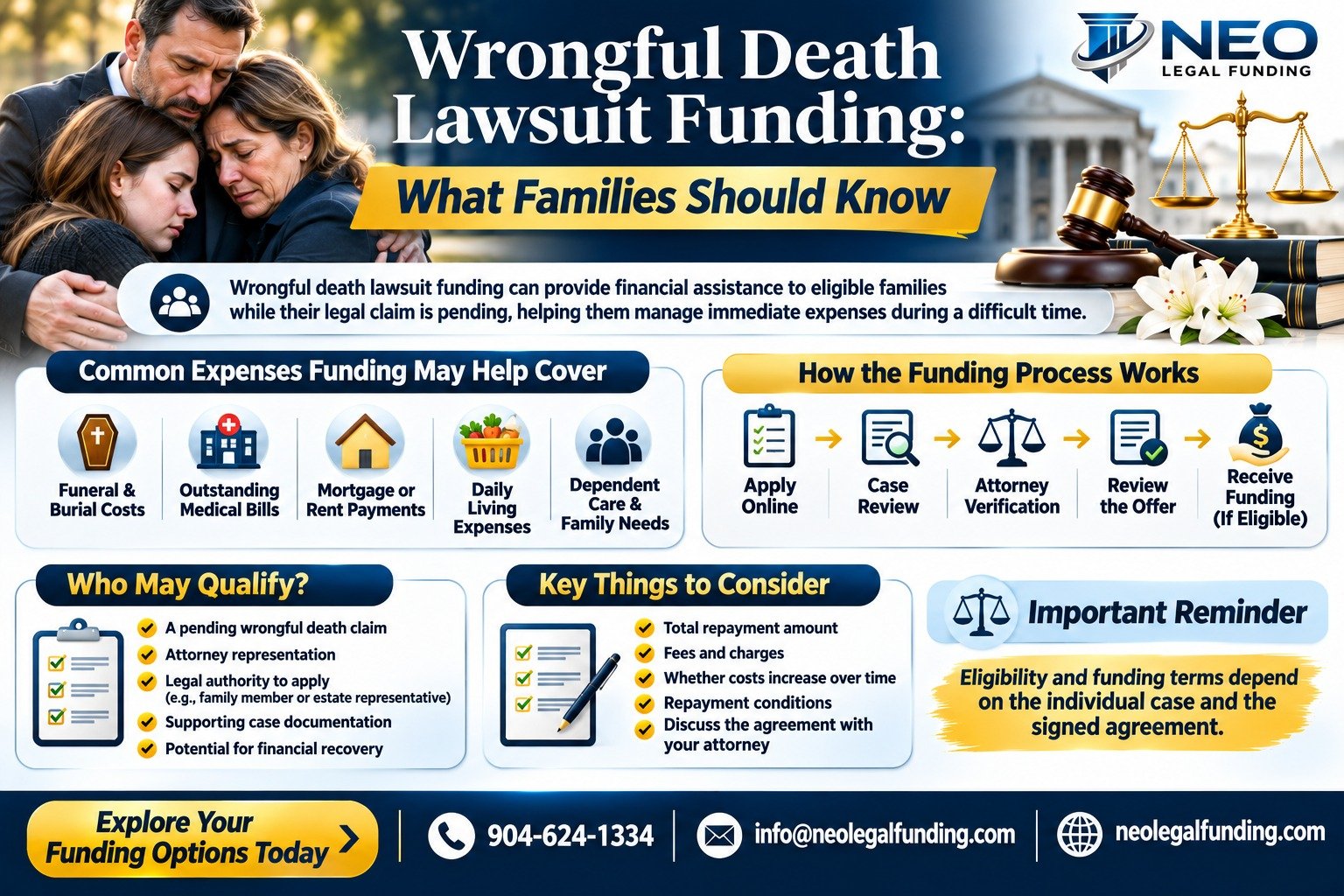
Funding may help eligible applicants manage expenses such as:
Pre-settlement funding may provide financial flexibility while an attorney investigates the claim, communicates with insurance companies, negotiates, or prepares for litigation.
However, funding is not a replacement for compensation, and it does not guarantee a particular legal outcome. Families should consider their immediate needs and the potential repayment obligation before accepting an offer.
Traditional personal loans usually involve scheduled repayments, credit assessments, and financial obligations that continue regardless of a lawsuit’s outcome.
Non-recourse legal funding is generally connected to the proceeds of a legal claim. The agreement determines when repayment is required and what happens if the case does not produce a recovery.
Families should ask for a written explanation of all charges, repayment conditions, and applicable fees before signing.
The application process generally involves several stages. The exact requirements depend on the case, the applicant’s legal authority, and the funding provider’s review.
Not every wrongful death claim qualifies for legal funding. The provider generally needs to understand the legal claim, the person authorized to apply, and the potential financial recovery.
Eligibility depends on state law, the structure of the claim, and the provider’s requirements. In many cases, a surviving spouse, child, parent, or legally appointed personal representative may have a role in bringing or managing a wrongful death claim.
Important considerations may include:
The person entitled to bring a wrongful death action is not necessarily the same in every state. A family’s attorney should confirm who has authority to apply and whether the proposed funding arrangement is appropriate.
Preparing relevant information can help the attorney and funding provider review the application.
Depending on the case, documents may include:
Wrongful death claims can involve complex legal questions about liability, eligible beneficiaries, estate administration, and the distribution of compensation.
An attorney can explain the applicable state requirements, help verify the claim, and review the proposed funding agreement. Families should not sign an agreement they do not fully understand.
Before accepting lawsuit funding for wrongful death case claims, families should carefully examine the total financial obligation.
Review these details:
A non-recourse agreement generally limits repayment to a successful recovery, but the exact terms must be confirmed in the signed contract.
Losing a loved one due to another party’s negligence can create emotional and financial challenges. Eligible plaintiffs with a pending wrongful death lawsuit may explore pre-settlement funding options. Review eligibility, fees, and repayment terms before applying.
Learn about the application process and whether your pending claim may qualify.
Before proceeding with wrongful death funding, consider asking:
NEO Legal Funding provides pre-settlement funding options for eligible individuals involved in wrongful death claims. Its service process involves reviewing case information and working with the applicant’s attorney to evaluate the claim.
Families considering lawsuit funding for wrongful death case expenses can contact NEO Legal Funding to discuss their circumstances and understand the application requirements.
NEO Legal Funding Contact Information
Conclusion
The loss of a loved one can create emotional challenges alongside significant financial responsibilities. While a wrongful death lawsuit may provide a legal path toward compensation, the process can take time, leaving families to manage immediate expenses during an uncertain period.
Wrongful Death pre-settlement funding may be an option for eligible claimants who need financial assistance while their case is pending. Before accepting lawsuit funding for wrongful death case expenses, understand who is legally authorized to apply, compare the full costs, and ask an attorney to review the agreement.
Making an informed decision can help families understand their financial options while keeping their legal rights and long-term interests in focus.
Frequently Asked Questions
Q1. What is wrongful death lawsuit funding?
Wrongful death lawsuit funding is a form of pre-settlement financial assistance connected to a pending wrongful death claim. Eligible applicants may receive an advance before the case resolves, subject to case review and a written agreement.
Q2. Who can apply for lawsuit funding for a wrongful death case?
Depending on state law, an eligible surviving spouse, child, parent, or legally appointed estate representative may be involved. An attorney should confirm who has legal authority to apply and receive funding.
Q3. Do I need an attorney to qualify for wrongful death funding?
Attorney representation and cooperation are generally required. The attorney can help verify the claim, provide relevant documentation, and review the proposed funding agreement.
Q4. Do families have to repay wrongful death funding if the case is unsuccessful?
Many wrongful death pre-settlement funding arrangements are structured as non-recourse agreements. Under such agreements, repayment is generally not required if there is no financial recovery. However, the specific contract controls, so applicants should confirm the conditions with their attorney.